
Epstein in the classroom
The Epstein scandal has focused attention on the abhorrent behavior of powerful adults towards vulnerable young people. It’s time for schools — and the media —to follow suit.

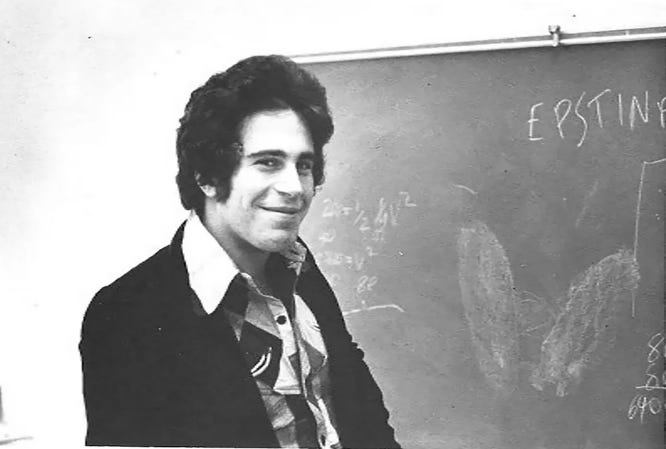
Above: Jeffrey Epstein in a Dalton yearbook image.
Imagine someone like Jeffrey Epstein teaching at your local high school. He’s a good listener. He gives good advice. Maybe he’s a little bit flirty with the kids sometimes. He’s grooming vulnerable students right under the noses of classmates, colleagues, and parents.
The scenario is terrifying — but it’s not so far from reality. Epstein actually started out as a charismatic prep school math and science teacher. Sexual misconduct in schools is widespread — affecting an estimated 40,000 children each year. Usually, the grooming takes the form of inappropriate texts, images, and words, but more than 300 educators were arrested for sexual crimes in a single year, according to one 2022 news report.
These behaviors are often aided by colleagues who don’t know the tell-tale signs of grooming, can’t imagine anyone they work with doing something so awful — or look the other way because they don’t want to face the consequences of raising a red flag.
The Epstein scandal has focused public attention on the abhorrent behavior of powerful adults towards vulnerable young people — and society’s inadequate response to their warnings. But meanwhile, there are too many people like Jeffrey Epstein in American classrooms. It’s time for schools — and media outlets — to take action.
There are too many people like Jeffrey Epstein in American classrooms.
A long-running abuser of teenage girls, Epstein had numerous contacts with schools before his death. He recruited at least 15 high school girls from a single high school in Palm Beach, Florida. He made an internationally famous arts school in Wisconsin a staging area for his recruiting. He repeatedly helped young women get into elite private schools and helped pay for their college education. Somewhat ironically, his Manhattan mansion was itself a former school building.
But the indirect connections between the infamous sexual predator and American education are much deeper. While schools promise to keep kids safe, sexual misconduct ranging from inappropriate comments to outright sexual assault is pervasive. Even when the perpetrators are caught, they often get away with their predations — allowed to resign, rehired in another district, or moved to another state. When they’re finally caught, it’s usually not the first time that it’s happened.
The common thread is an unwillingness by adults to put children — teenage girls especially — first. Despite years of attention and repeated efforts to close loopholes and protect students, 15 states still lack comprehensive sexual legislation.
The common thread is an unwillingness by adults to put children — teenage girls especially — first.
The problem isn’t just inadequate protections in schools; it’s also inadequate media coverage from local and national newsrooms.
School-based sexual misconduct is everywhere in pop culture, including most recently the Tony-winning Broadway play ‘John Proctor Is the Villain.’ But the topic is covered nowhere near as pervasively in the media as it is in real life.
There’s a steady trickle of news stories each week. Every year or two, a handful of investigative reporters unearth horrifying information, which I’ve done my best to amplify (see below).
However, the topic rarely gets the prolonged attention that it warrants — or the public action that it deserves. I can count on just one hand the number of newsrooms and reporters that have made school sexual misconduct a regular part of their coverage.
Meanwhile, some schools are considering posting sex trafficking prevention signs like you might see at a bus depot or on the subway to raise awareness. Some states like California, Texas, and New York are making schools financially liable for inadequate measures.
I can count on just one hand the number of newsrooms and reporters that have made school sexual misconduct a regular part of their coverage.
Not everyone will agree that the Epstein comparison is an appropriate one. Educators who look the other way are doing so for very different reasons than powerful individuals who aided and abetted Epstein. The vast majority of educators aren’t doing anything worrisome. Sexual assault and physical rape are rare in school misconduct cases. Too much of a focus on clueless but harmless educators could have unintended side effects.
Of course there are other, equally important concerns facing education. School leaders and journalists are overworked and distracted. And nobody wants to over-amplify parents’ fears — or give unwarranted assistance to right-leaning media outlets and social media influencers who usually jump on these stories first in order to discredit schools.
I get it. It’s deeply uncomfortable training administrators, educators, students and parents to identify and respond to red flag sexual grooming behaviors. However, an estimated one in ten students experience some form of sexual misconduct in school during their K-12 years — almost all of which involve grooming. And, while teachers sometimes get accused of things that they didn’t do, as happened most recently in the case of a wrongly accused Bay Area teacher — it’s a rare occurrence that unfounded allegations lead to disciplinary actions.
A handful of recent investigations and research have shown that young people too often experience horrific predatory behavior — allowed by adult complicity on a massive scale over an extended time period. Education’s Jeffrey Epstein moment should start now. The media should help lead the way.
Additional resources
Dig, Season Three: The Girls (four-part podcast from KY Center for Investigative Journalism)
Kentucky school district settles $3 million coach sex abuse lawsuit (Louisville Courier Journal)
200 teacher sexual misconduct, grooming cases shielded from public (Wisconsin Cap Times)
‘Something can be done about this’: New plan aims to stop sex abuse in California schools (CalMatters)
Sexual Misconduct by J.R.O.T.C. Instructors Is Pervasive, Report Finds (NYT)
Stopping sexual abuse in schools ‘is not rocket science,’ national advocate says (WPR)
The Financial Fallout Over Child Sexual Abuse Lawsuits in California (NYT)
The Problem Schools Are Ignoring (Harvard EdCast / Shakeshaft interview)
Prevention Education (List of states with comprehensive laws)
How churches and schools get away with grooming and how to stop abuse (Jeglic interview)
Previously from The Grade
Making school sexual misconduct a core part of the beat (Danielle DuClos interview)
School secrets and sexual assault (interview with Stephanie Kuzydym)
How journalists can help prevent sexual misconduct in schools (by Jetta Bernier)
One reporter’s efforts to end ‘passing the trash’ in California schools (Matt Drange)
The systemic problem education journalists are ignoring (Charol Shakeshaft interview)