
Recognizing hype, districts supporting school choice, & the hidden school reform movement
Weekend highlights, plus a newly-unlocked Secret Bonus Section column about districts leaning into school choice and an interview with NPU's Charlie Barone.

WEEKEND HIGHLIGHTS
💥 This helpful organization is trying to help train journalists recognize hype.
💥 The makers of i-Ready are now being sued by the Center for Education Progress.
💥 The Globe’s opinion section is launching College Town, a weekly email newsletter packed with insights about higher ed from Globe journalist Hilary Burns.
How districts help themselves by helping parents
Longtime education advocate Mickey Revenaugh has spent the past three years researching the explosion of homeschooling, microschools, virtual schools and other forms of what she calls “unconventional education” for her newly-published book, School’s Out.
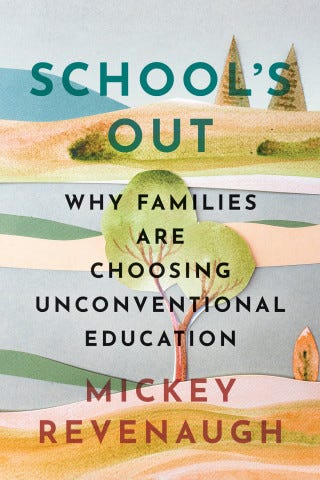
What’s surprised her most, however, was a vanguard of public school leaders who aren’t asking how to stop educational choice. They’re asking how to make public education the most attractive choice available.
The school reform nobody sees
The conventional wisdom is that school reform has been dead for about a decade now, for better or worse.
But the National Parents Union’s Charlie Barone has a different take, which is that a lot of different things are happen — even if they aren’t national, bipartisan, or familiar.
Watch the interview or read the transcript above (or on YouTube).
Listen to the conversation on Spotify or Apple.
The missing accountability question
Number of the 10 questions in a recent interview with ISTE’s Richard Culatta that ask him to reflect on his role in promoting ineffective edtech? None.
The Mickey Revenaugh detail is the one worth sitting with, since three years of research into unconventional education landing right as districts start reframing themselves as the choice rather than the default is a genuinely interesting coincidence in timing, whether or not it was intentional on the publishing side. It also reframes school choice less as an external threat to public education and more as a competitive pressure that some districts are actually using to improve, which runs counter to the usual framing in most education coverage.
Did Revenaugh's research point to specific tactics that are working for the districts leaning into this, or is it more that the mindset shift itself is the main finding at this stage?